
Soil-Based French Drain Pricing: Getting the Best Clay Soil, Sandy Ground & Rocky Terrain French Drain Cost in South Africa, Johannesburg, South & Pretoria, East, Centurion
This guide covers soil-based French drain pricing for 2026 in Pretoria, Centurion, Johannesburg, and Sandton. We’ll provide clear insights into the costs of these effective drainage systems.
Fed up with water pooling in your garden after rain? French drains could be your answer. Let’s explore their costs in South Africa.
In Pretoria, installation costs range from R2,500 to R4,500 per linear metre. The average price for standard residential installation is about R3,500 per linear metre. Centurion’s prices are slightly higher, averaging R3,800 per linear metre.

Soil drainage system pricing in South Africa depends on location and soil type. Clay soils may increase costs by up to 20% due to extensive excavation needs. In Sandton, prices can reach R5,000 per linear metre.
French drain cost in Johannesburg varies based on soil conditions, property size, and drainage needs. A typical system might need 20 to 50 linear metres. Labour costs usually make up about 30% of the total price.
Soil types, seasonal factors, and long-term benefits affect the overall investment in French drains. These elements play a crucial role in determining the final cost across different regions – Contact Us
Soil-Based French Drain Pricing: Understanding French Drain Systems in South African Soil Conditions
South African soil conditions create unique challenges for French drain installations. Our diverse landscape needs soil-specific French drain designs for optimal drainage. Let’s examine how soil types affect installation and costs across the country.
Clay Soil Drainage Requirements
Clay soil poses significant challenges for French drains due to poor drainage qualities. These solutions often require extensive excavation and specialised materials. This can increase costs, but it’s vital for long-term effectiveness.

Sandy Ground Installation Specifics
Sandy soil, common in coastal areas, drains quickly but may need extra stabilisation. French drains in sandy soil often require less excavation. This can potentially reduce costs compared to clay soil installations.
Rocky Terrain Considerations
Rocky terrain demands robust equipment for installation. Large rocks can complicate excavation and increase labour costs. However, rocky soil often provides natural drainage, simplifying some aspects of French drain design.
Mixed Soil Types Solutions
Many South African properties have mixed soil types, requiring a tailored approach. We consider each layer’s composition when creating soil-specific French drain designs. This ensures effective drainage across varying soil conditions.
| Soil Type | Drainage Rate | Installation Complexity | Cost Factor |
|---|---|---|---|
| Clay | Slow | High | 1.5x |
| Sandy | Fast | Low | 0.8x |
| Rocky | Variable | High | 1.3x |
| Mixed | Moderate | Medium | 1.0x |
Knowing your soil type is crucial for an effective French drain system. Professional assessment helps determine the best approach for your property. This ensures optimal drainage and longevity of your investment.
Soil-Based French Drain Pricing
French drain system costs vary based on soil, materials, and regional factors. This guide will help you budget for your drainage project.
Material Costs by Soil Type
Soil composition affects French drain material selection and pricing. Clay soils need pricier, high-quality materials for robust drainage solutions.
Sandy soils allow for more budget-friendly options. Rocky terrain might require specialised equipment, which can increase overall costs.
| Soil Type | Material Cost Range (per metre) | Recommended Materials |
|---|---|---|
| Clay | R300 – R500 | Heavy-duty perforated pipe, coarse gravel |
| Sandy | R200 – R350 | Standard perforated pipe, mixed gravel |
| Rocky | R400 – R600 | Reinforced pipe, crushed stone |
Labour Costs Across Regions
French drain installation labour costs differ across South Africa. Urban areas like Johannesburg and Sandton typically have higher rates than rural locations.
Skilled labour is crucial for proper installation and system effectiveness.
Equipment and Machinery Requirements
Equipment for French drain installation can impact your budget. Excavators, trenchers, and compactors are often necessary for the job.
Specialised machinery for difficult terrains may increase costs but ensure better results.

Perforated Pipe and Gravel Expenses
Perforated pipe is a significant cost component. High-quality pipes range from R50 to R150 per metre.
Gravel costs vary between R300 to R600 per cubic metre. Gravel-free options are available, potentially reducing expenses and simplifying installation.
Regional Installation Cost Variations – Soil-Based French Drain Pricing
Soil-based French drain installation costs differ across South Africa. Our guide explains pricing variations in major urban areas. Understanding these differences can help you budget for your drainage project.
Pretoria and Centurion Pricing Guide
In Pretoria, French drain prices range from R3,000 to R15,000 per 100 linear feet. Soil type and property size affect the cost. Clay-rich areas in Pretoria East may have higher prices.
French drain installation in Pretoria East typically costs between R5,000 and R18,000. This pricing reflects the standard installation process in the area.
Johannesburg Metropolitan Rates
Johannesburg’s varied soil conditions impact drainage costs. Sandy areas might require less labour, lowering overall expenses. Homeowners can expect to pay R4,500 to R20,000 for a French drain system.

Sandton Premium Installations
Sandton’s upscale properties often need premium drainage solutions. Costs here range from R6,000 to R25,000 per project. This reflects higher-end materials and complex landscaping needs.
South African Provincial Differences – Soil-Based French Drain Pricing
Soil drainage costs in Pretoria North differ from other provinces due to unique geology. Coastal regions might face higher water tables, increasing installation complexity.
Rural areas often benefit from lower labour costs. This can reduce overall expenses by 10-20% compared to urban centres.
| Region | Average Cost | Factors Affecting Price |
|---|---|---|
| Pretoria | R3,000 – R15,000 | Soil type, property size |
| Johannesburg | R4,500 – R20,000 | Soil diversity, urban density |
| Sandton | R6,000 – R25,000 | Premium materials, complex landscaping |
| Rural Areas | R2,700 – R13,500 | Lower labour costs, simpler access |
Professional Installation vs DIY Cost Analysis – Soil-Based French Drain Pricing

French drain systems present a choice between DIY and professional installation. Our analysis shows notable cost differences, particularly in Gauteng. DIY offers savings, but comes with its own challenges.
Professional external French drain installation costs R500 to R900 per linear meter. DIY installation is cheaper at R200 to R350 per linear meter, not including labour time. This significant gap makes DIY appealing for those on a budget.
| Installation Type | Cost per Linear Meter | 100 Linear Meter Cost |
|---|---|---|
| Professional | R500 – R900 | R50 000 – R90 000 |
| DIY | R200 – R350 | R20 000 – R35 000 |
DIY installations require careful planning and execution. A proper slope of at least 1% is essential. Correct materials like 4-6 oz non-woven drainage fabric and ¾ inch gravel are crucial.
Accurate sizing of pipes and catch basins is also important. Mistakes can result in poor drainage or expensive fixes.
For affordable French drain systems in Gauteng, consider a mixed approach. Seek professional advice for design and key aspects. Handle simpler tasks yourself to save money without sacrificing quality.
Long-Term Cost Benefits of French Drains – Soil-Based French Drain Pricing
French drains offer big financial advantages for South African property owners. Our analysis shows great returns on investment, especially in Pretoria with its tricky soil conditions.
A French drain system can greatly reduce water damage risks to your property. These systems can lower basement flooding chances by up to 70%. This could save you thousands in repairs over time.
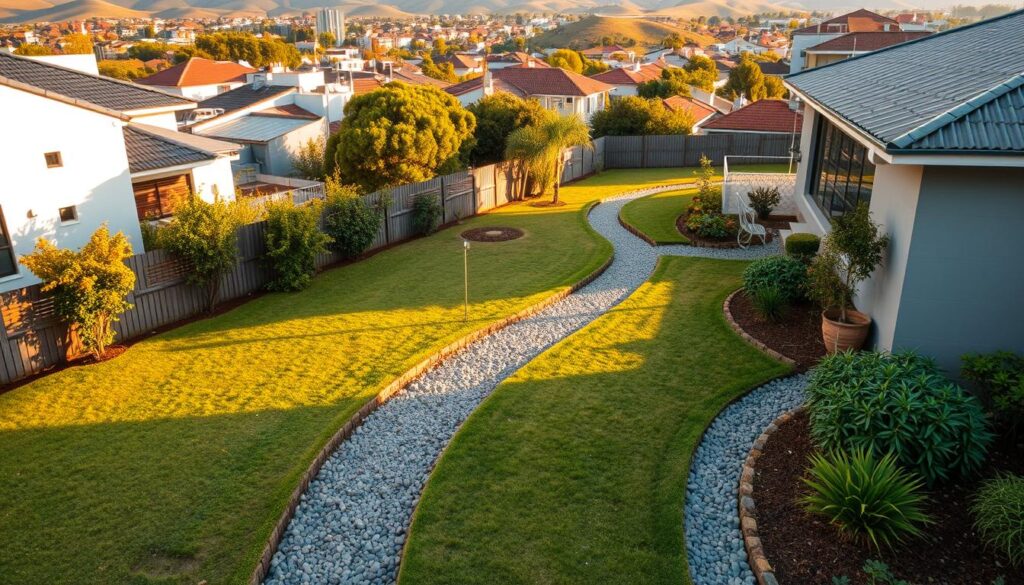
The French drain ROI in Pretoria is impressive. Property owners might cut foundation damage costs by half. This leads to big savings, given the expected 2026 installation costs.
Installation costs in 2026 are set to range from R2,500 to R5,000 per metre. Let’s look at the long-term benefits in more detail:
| Benefit | Percentage Improvement | Cost Savings |
|---|---|---|
| Soil Erosion Reduction | 60% | Landscape preservation |
| Soil Drainage Efficiency | 80% | Enhanced plant growth |
| Mosquito Breeding Site Reduction | 90% | Health cost savings |
| Water Conservation (with harvesting) | 30% | Reduced water bills |
These numbers highlight the value of French drain investments for properties. They prevent water build-up and improve soil conditions. This protects your property and boosts its overall worth.
Seasonal Considerations for French Drain Installation – Soil-Based French Drain Pricing
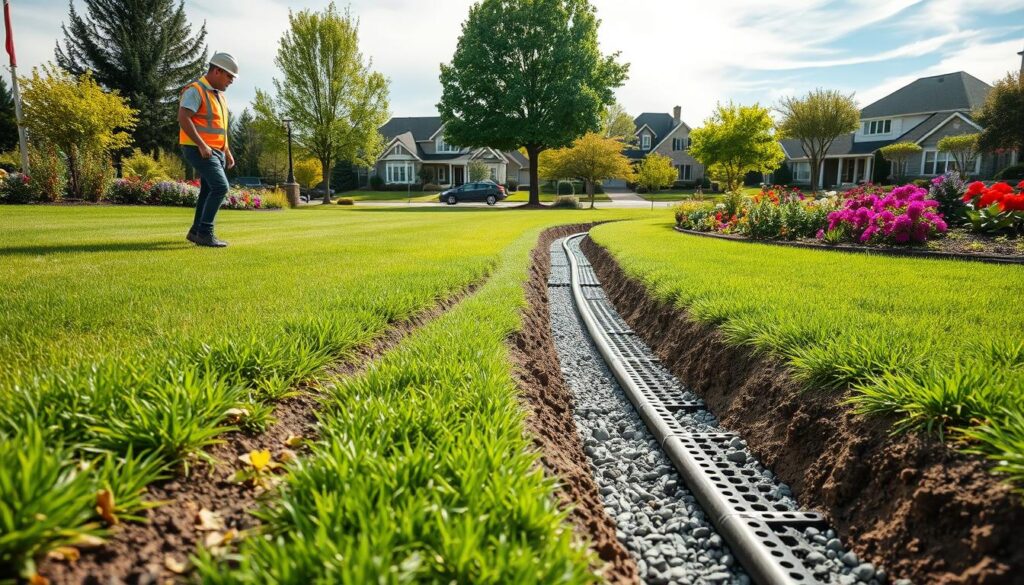
The timing of French drain installation affects both cost and effectiveness. In South Africa, rainfall patterns and soil moisture influence installation processes and pricing. These factors vary across different regions.
Rainy season preparation drainage pricing is higher due to increased demand. Working conditions are more challenging during this time. Installation costs can range from R150 to R1,500 per linear metre.
Monsoon soil drainage solutions cost more in areas with heavy clay soils. These soils become waterlogged and difficult to work with during wet seasons. Prices can increase by 20-30% compared to dry season rates.
| Season | Average Cost (per linear metre) | Installation Time |
|---|---|---|
| Dry Season | R100 – R1,000 | 1-3 days |
| Rainy Season | R150 – R1,500 | 3-5 days |
| Transitional Periods | R125 – R1,250 | 2-4 days |
Seasonal soil drainage maintenance pricing changes throughout the year. Annual maintenance costs range from R500 to R2,000. Prices are higher during peak rainy seasons.
Regular upkeep is vital for optimal performance of your French drain system. It also ensures the longevity of the drainage solution.
Plan your French drain installation during drier months for more favourable soil conditions. This approach can lead to cost savings and a more efficient installation process.
Soil-Based French Drain Pricing: Making an Informed Decision
French drain installation costs vary between R200 to R450 per linear meter. For a standard home, total costs typically range from R20,000 to R100,000. Soil type, drain length, and regional pricing affect these figures.
French drains can boost property value by ensuring a dry basement. This benefit may offset initial costs of R40,000 to R300,000 for basement installations. It’s wise to get quotes from trustworthy local contractors for accurate pricing.
Proper design and installation are crucial for water table management systems. French drains need little upkeep, but regular checks and cleaning prevent clogging.
Consider these factors and seek expert advice. This will help you choose the best French drain system for your property’s drainage needs.
FAQ
1. How much does a French drain typically cost in Pretoria?
French drain costs in Pretoria vary based on soil type, property size, and drainage needs. Expect to pay between R15,000 and R50,000 for professional installation. For precise pricing, get quotes from local contractors.
2. Are French drains effective in clay soil?
French drains can work in clay soil, but require special considerations. Installations may need to be deeper and wider. Specific materials are crucial for proper water flow.
3. Can I install a French drain myself to save money?
DIY installation is possible, but consider the complexities involved. Professional installation ensures proper design and adherence to local regulations. DIY may save on labour but can lead to higher costs if done incorrectly.
4. How do seasonal factors affect French drain installation costs?
Dry seasons allow for easier excavation, potentially reducing labour costs. Installing during the rainy season might help identify problem areas. Plan your installation during the dry season if possible.
5. What materials are typically used in a soil-based French drain?
Common materials include perforated pipes, geotextile fabric, and gravel or alternative fill materials. Specialised drainage boards are sometimes used. Materials vary based on soil type and drainage needs.
6. How long does a French drain typically last?
A well-installed French drain can last 30 to 40 years with proper maintenance. Lifespan varies based on soil conditions and installation quality. Regular cleaning and inspection can significantly extend the system’s life.
7. Are there any alternatives to traditional French drains for South African soil conditions?
Alternatives include surface swales, dry wells, and rain gardens. A combination of drainage solutions might work better in areas with high clay content. Consult a local drainage expert for the best solution.
8. How do French drain costs in Johannesburg compare to those in Pretoria?
Johannesburg costs are generally similar to Pretoria’s, but can be slightly higher. Urban density and property values in areas like Sandton can influence pricing. Get quotes from contractors in both cities for accurate comparison.
9. What factors most significantly impact the cost of a French drain installation?
Key factors include soil type, drain depth and length, and installation area accessibility. Materials used and labour costs also play a role. Complex installations in difficult soil conditions can substantially increase costs.
10. How can I determine if my property needs a French drain?
Signs include persistent standing water, damp basements, and recurring foundation problems. Consider having a professional drainage assessment done. This can identify problem areas and determine if a French drain suits your property.

